Textured crop
Compact length and controlled separation for a thinning top.
Density-aware hairstyle guide and try-on
Hairstyles for thinning hair can create a clearer silhouette by controlling length, separation, and where volume sits. Compare a compact crop, soft pixie, blunt perimeter, or loose movement without asking the preview to invent density you do not have.
Compare outline and movement rather than treating the reference photo as proof of density.
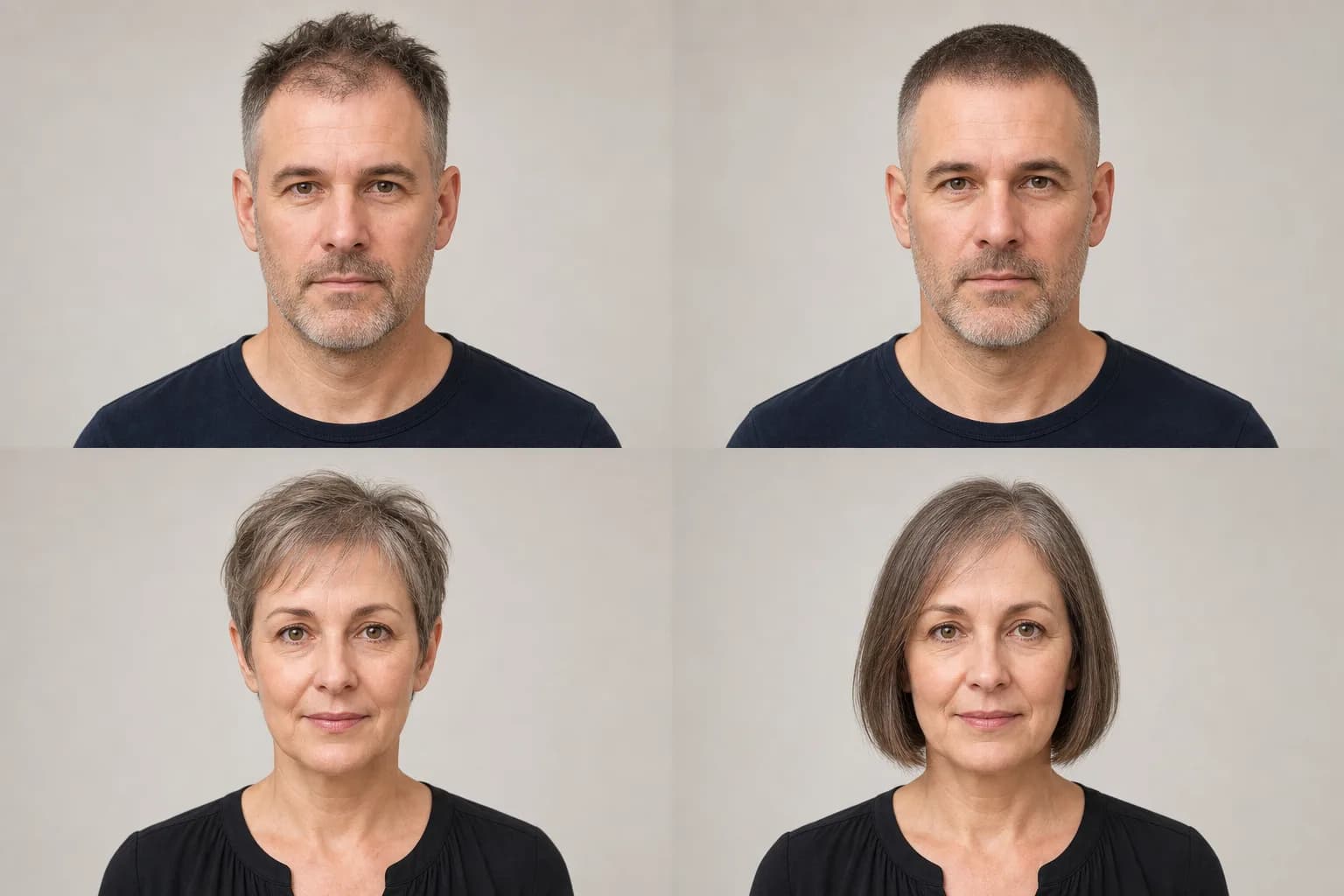
Compact length and controlled separation for a thinning top.
An even short shape that keeps visible density believable.
Short movement with less weight at the ends.
A firmer perimeter with minimal visual thinning at the ends.
Long, separated ends can make low-density areas more noticeable, while a compact perimeter or controlled texture can make the overall shape read more clearly. The goal is a believable arrangement of your hair, not simulated extra growth.
Use an evenly lit photo where the top, part, and front hairline are visible.
Generate a recommendation that preserves your visible density and natural growth direction.
Compare one compact style with one softer option, then save the version that looks practical to maintain.
Useful cuts reduce unnecessary separation, place volume where it can be supported, and keep the perimeter intentional. Hair fiber diameter, curl pattern, and density still change the result.
A compact top with broken texture can reduce long separations and keep the silhouette controlled when thinning is most visible on top.
Shorter overall length reduces the contrast between sparse and dense areas and requires less daily positioning.
Short layers can create movement without leaving long, transparent ends. Keep the top light enough to avoid visible separation.
A stronger perimeter can make the ends look more substantial than heavily feathered or over-layered lengths.
Loose bends can add visual movement, but very separated curls or heavy products may expose more scalp between sections.
A slightly shifted or less precise part can reduce one sharp line of contrast. Avoid forcing hair against its natural growth pattern.
Compact crops, crew cuts, soft pixies, blunt bobs, lobs, and controlled waves are useful starting points. The strongest option depends on where density is reduced and how your hair naturally falls.
Shorter hair can reduce separation and make styling simpler, but medium blunt lengths may also work. Compare the outline and maintenance needs rather than using one rule for every density pattern.
A textured crop, crew cut, or close crop can keep the top compact. Very long swept sections often require more positioning and may separate during the day.
Soft pixies, short bobs, and blunt lobs can create a clear perimeter without excessive layering. Choose a length that works with your texture and preferred styling routine.
No. It compares hairstyle shapes only. Questions about the cause or treatment of hair thinning should be taken to a qualified health professional.