Crew cut
Short, neat, tapered, and straightforward to maintain.
Practical men’s hairstyle guide and try-on
Hairstyles for older men work best when the cut fits the current hairline, density, texture, and amount of daily styling you want. Compare a close crop, side part, brushed-back shape, or longer movement without trying to recreate an earlier head of hair.
These references cover distinct routines. Keep the current hairline and density consistent when judging which silhouette feels most natural.
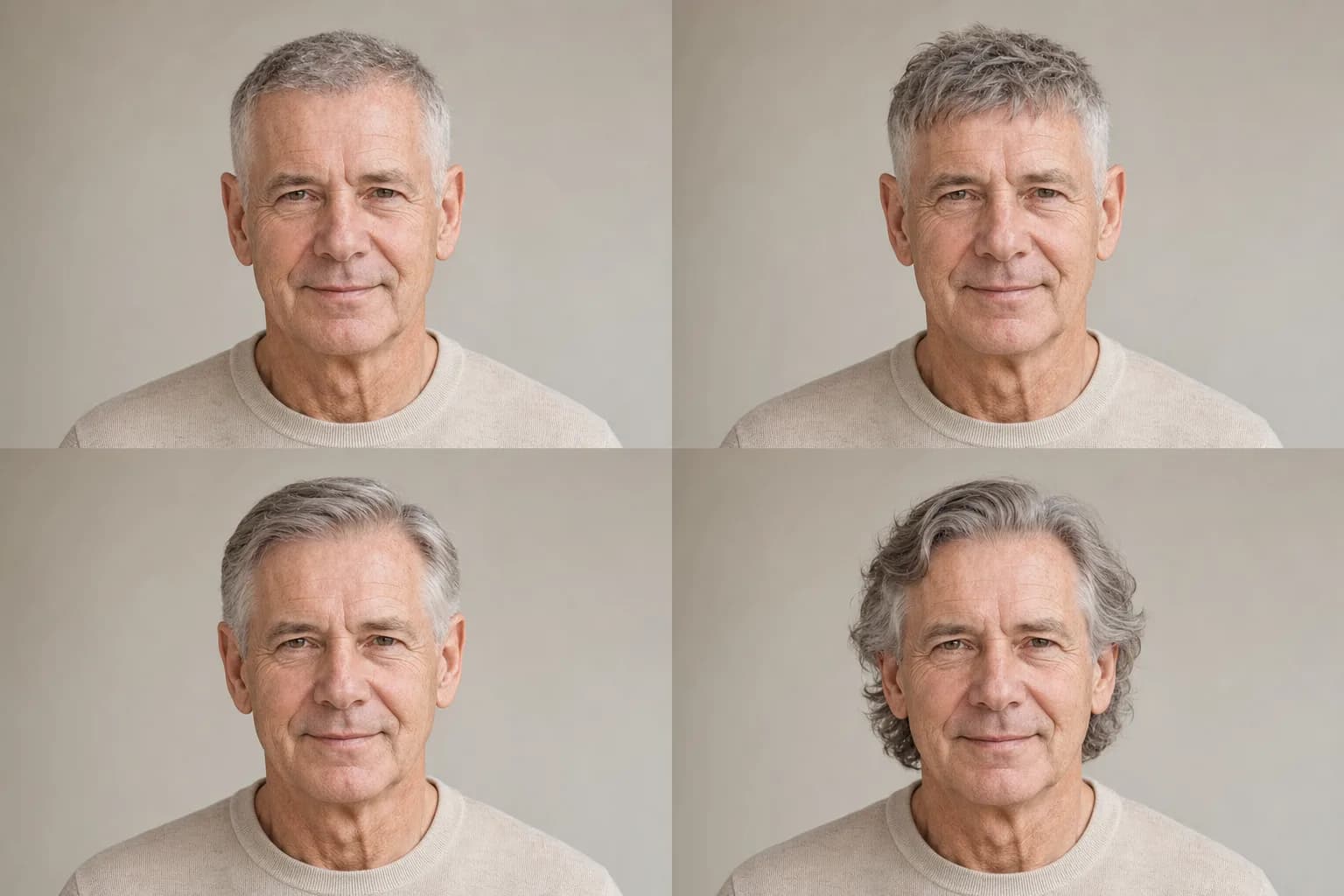
Short, neat, tapered, and straightforward to maintain.
Compact forward movement with a less formal front edge.
A classic structured direction that can remain soft and flexible.
More length and movement when the current density supports it.
A strong haircut can expose the hairline, soften it with texture, or use longer movement where density supports it. The most believable option works with growth direction and stays presentable without constant repositioning.
Upload an evenly lit photo that shows the front hairline, sides, and top.
Generate a recommendation based on the hair visible now, then compare a shorter alternative.
Refine the part, texture, or length and save the option you could maintain every day.
The useful distinction is how each cut handles hairline, density, texture, and upkeep. Gray hair can add visible texture and contrast; it does not require one specific length.
A tapered short cut gives the top a clear outline and keeps the routine simple. It can expose the natural hairline in a deliberate way.
Broken forward texture can soften the front edge and reduce the need for a precise part, provided the top has enough density to support separation.
A flexible side direction looks structured without requiring a hard line. Follow the natural growth pattern rather than forcing hair across sparse areas.
A compact brushed-back shape keeps the forehead open and works best when the front remains strong enough to hold together.
Extra length can show wave and silver texture when density supports it. Keep the perimeter intentional so the style reads as chosen rather than overgrown.
An even close cut minimizes length differences and daily styling. Compare it when simplicity matters more than changing the visible hairline.
Crew cuts, textured crops, side parts, short brushed-back styles, buzz cuts, and medium natural waves are useful starting points. Choose by current density, growth pattern, texture, and upkeep.
A crew cut, textured crop, buzz cut, or short side part can create a clean outline with limited daily styling. The best option depends on how much density remains at the front and top.
Yes. Medium or longer hair can work when the perimeter stays intentional and the current density supports the shape. Natural wave and gray texture can become part of the look.
Compact crops, crew cuts, and close cuts can reduce long separations. If density is reduced across the top, compare the dedicated thinning-hair guide rather than treating age as the cause.
No. It compares hairstyle directions only. Questions about a sudden or concerning density change should be discussed with a qualified health professional.