Textured crop
Forward, separated texture with a compact outline.
Hairline-aware hairstyle guide and try-on
Hairstyles for a receding hairline work best when the cut makes the hairline part of a deliberate shape. Compare forward texture, a softer fringe, a close crop, or an open hairline on your own photo before choosing a cut.
These references show different strategies rather than guaranteed fixes. Use the same photo for each preview so the hairline remains consistent.
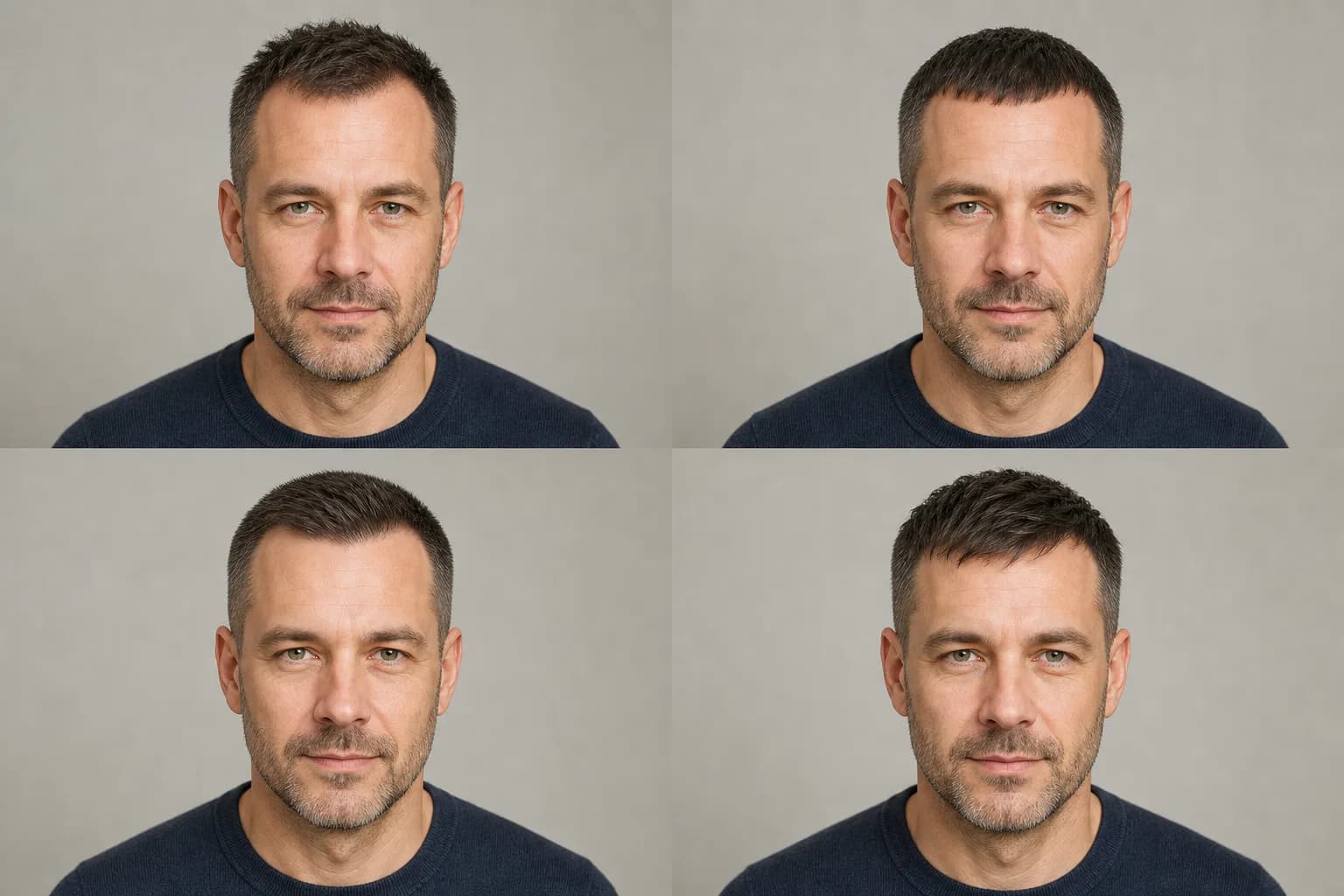
Forward, separated texture with a compact outline.
A short top directed forward toward the hairline.
A neat tapered option with modest length on top.
A softer front edge with visible texture instead of a hard line.
A receding hairline can be handled in several valid ways. Forward texture can reduce contrast at the temples, a side-swept shape can redirect attention, and a short even cut can make the hairline look intentional rather than concealed.
Upload a front-facing photo that clearly shows your forehead, temples, and current density.
Generate an AI-recommended starting point without asking the preview to create an unrealistic hairline.
Compare the result with a textured crop, fringe, crew cut, or shorter option and save the most believable version.
The strongest option depends on where the hairline has changed, how much density remains behind it, and whether you prefer coverage or a cleaner exposed shape.
Short, broken texture can reduce the visual contrast between the front hair and the temples without requiring a precise straight hairline.
A short fringe directs the shape forward. It works best when enough density remains at the front to keep the finish believable.
Tapered sides and a short top create a clean outline while leaving enough length to change the direction of the front.
An even close cut reduces the difference between thinner and denser areas and treats the natural hairline as part of the look.
A loose side direction can soften one temple without the tension and separation created by a hard comb-over.
A light fringe or face-framing layer can soften the temple area while preserving movement and avoiding a heavy block of bangs.
A textured crop, short fringe, crew cut, or buzz cut can all work. The best choice depends on the remaining density, the recession pattern, your growth direction, and whether you want to soften or expose the hairline.
Short styles often reduce the contrast between the front and the sides, but they are not the only option. A believable fringe or side-swept shape may work when the front still has enough density.
Yes. Softer fringes, face-framing layers, textured pixies, and flexible side parts can be compared using the same principles without relying on a men’s cut.
No. The preview only helps compare visual hairstyle directions. A sudden or concerning change in the hairline should be discussed with a qualified health professional.
No. Density, hair texture, growth pattern, styling products, and the stylist’s technique affect the real result. Use the image as a discussion reference.