Curtain bangs
Soft center-parted coverage with visible cheek framing.
Forehead-framing hairstyle guide and try-on
Hairstyles for a big forehead can change the frame through fringe, part placement, side volume, and the amount of height on top. Decide whether you want partial coverage, softer proportions, or an intentionally open forehead before choosing a cut.
Use these as starting points. The same fringe or part will sit differently depending on hairline, texture, and density.
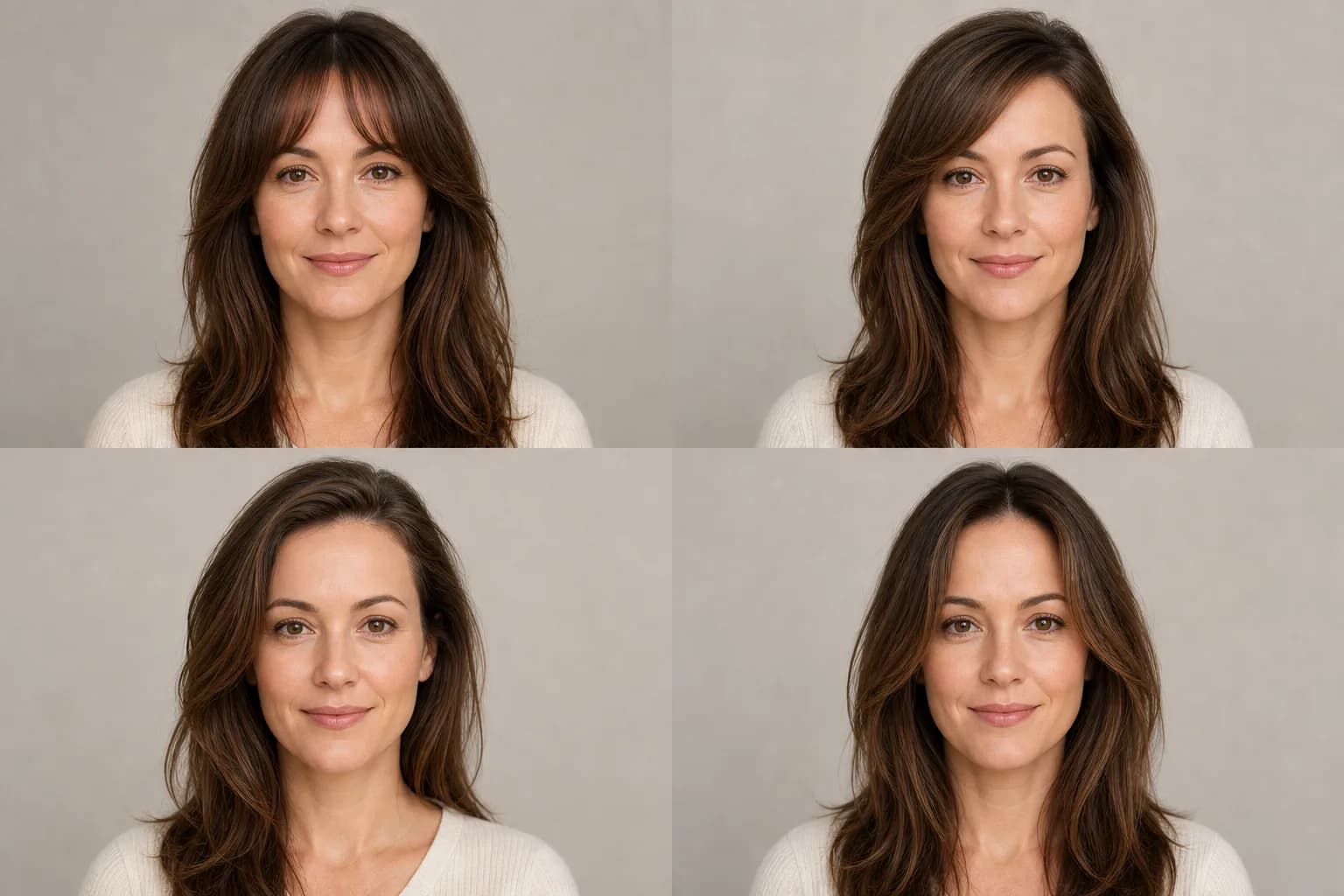
Soft center-parted coverage with visible cheek framing.
A soft diagonal front that changes the upper frame.
An open style with a diagonal rather than central frame.
Face-framing movement without full forehead coverage.
Coverage is only one option. Curtain bangs can divide the width, a side part can create a diagonal frame, and layers near the cheeks can shift the overall balance without hiding the forehead completely.
Upload a front-facing photo with the full forehead and both sides of the face visible.
Generate a recommendation, then compare at least one fringe option with one open style.
Refine the part, bangs, texture, or length and keep the framing you prefer.
The best direction depends on your face length, hairline, texture, and preferred amount of coverage. These choices can soften or emphasize the forehead without treating it as something that must be hidden.
A center opening keeps the face visible while breaking the forehead into softer diagonal sections.
A diagonal front can reduce one uninterrupted area of forehead and works for both longer women’s styles and men’s cuts.
Short broken pieces create a less formal front edge than a heavy straight fringe and can work with a compact crop.
Moving the part changes where the eye reads height and width without requiring full bangs.
Movement around the cheeks adds width lower in the frame and can make a longer upper face feel more proportioned.
Extra height can lengthen the face further. Keep it modest when balance is the goal, or use it intentionally when you prefer a stronger silhouette.
Curtain bangs, a side-swept fringe, an off-center part, cheek-level layers, or a textured men’s fringe are useful starting points. The best choice depends on how much coverage you want and how your hair naturally falls.
They can, but the shape matters. Curtain or side-swept bangs often feel lighter and more flexible than a dense straight fringe, especially when you want to keep part of the forehead visible.
A textured fringe, Caesar cut, side part, crop, or clean buzz cut can all work. Compare a covered front with an intentionally open style instead of assuming one approach is required.
Light curtain bangs, a soft side fringe, or face-framing layers can change the proportions without using an overly heavy fringe that the available density may not support.
No. Cowlicks, density, texture, humidity, styling, and cutting technique affect how a fringe sits. Use the preview to discuss direction and length with a stylist.