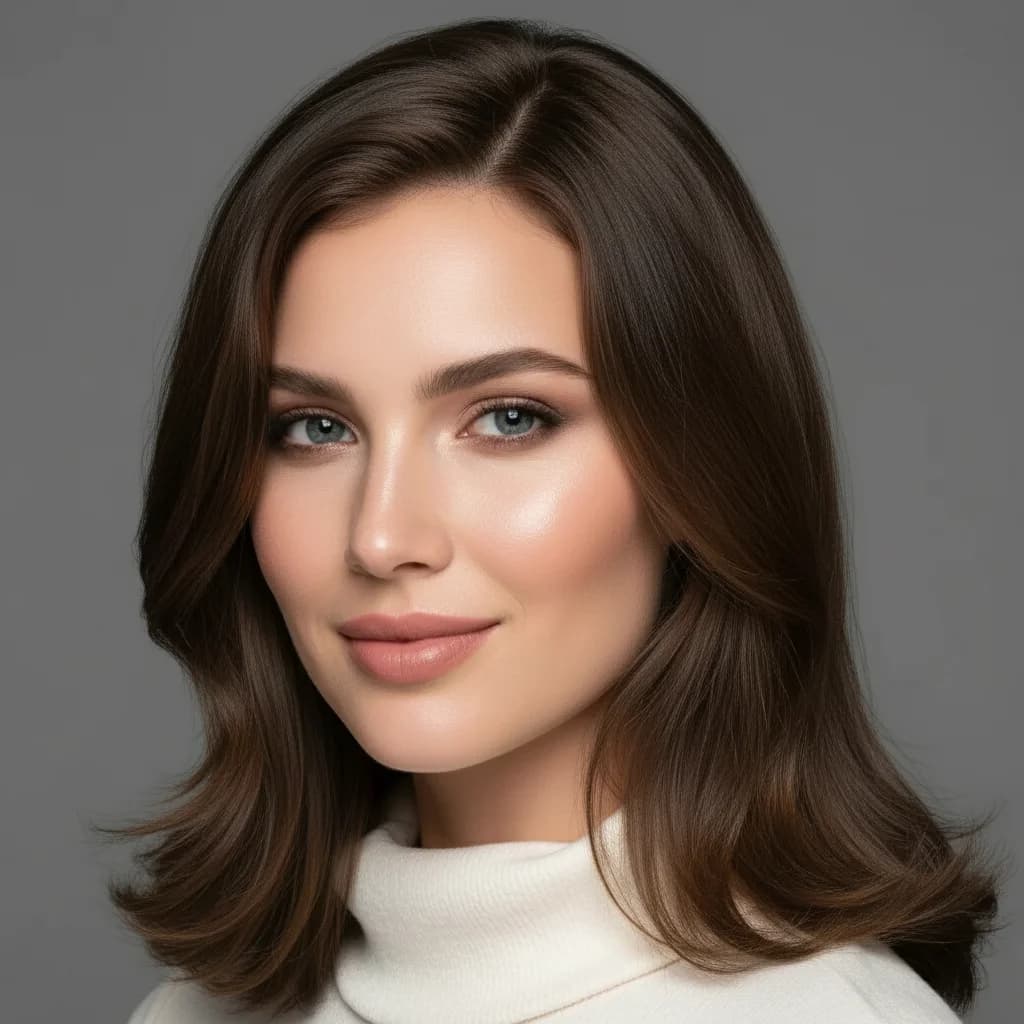
Long layers
Vertical movement that starts below the cheek.
Round-face hairstyle guide and photo try-on
Hairstyles for a round face create noticeably different effects through vertical length, diagonal lines, side volume, and where the ends sit. Compare those choices on your photo instead of relying on one “slimming” rule.
Keep the photo and hair color consistent so the part, endpoint, fringe, and outer shape are easier to judge.
Vertical movement that starts below the cheek.
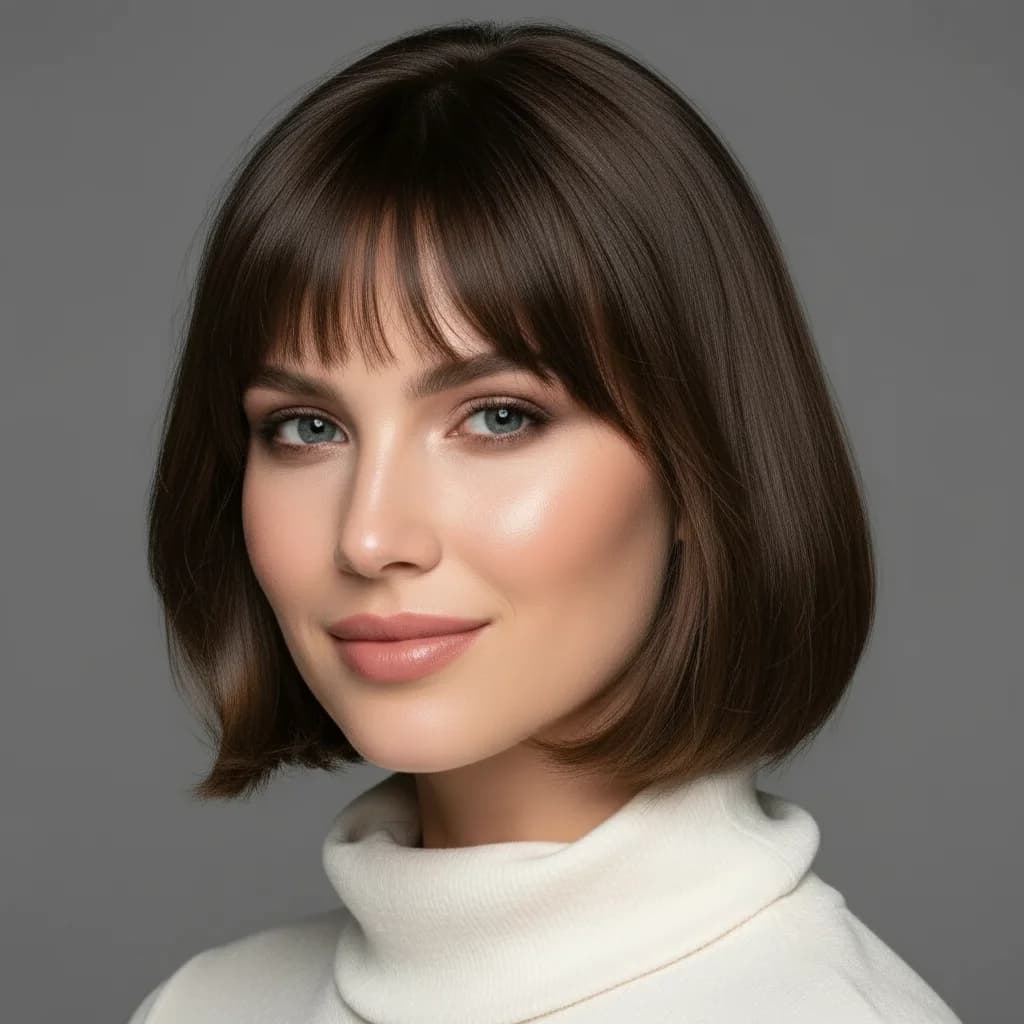
A divided fringe with the center of the face still visible.
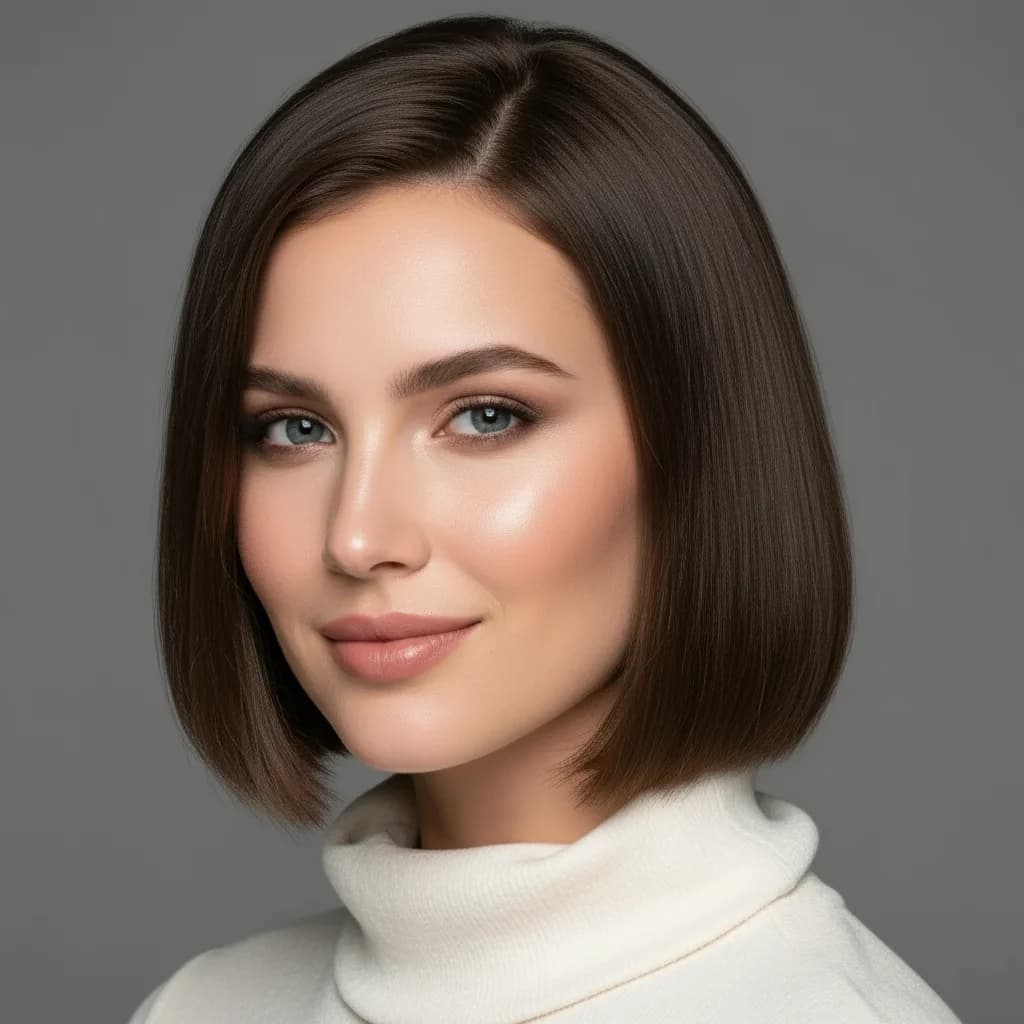
A medium-length endpoint placed below the jaw.

A diagonal forehead line with controlled side width.
Long layers can extend the outer silhouette, an off-center part adds a diagonal line, and a textured short cut can keep the face open. The useful comparison is how the whole haircut works with your features, texture, and preferred maintenance.
Upload a front-facing photo that clearly shows your forehead, cheeks, jaw, and hairline.
Generate a recommendation, then compare one longer shape with one shorter option.
Change the part, fringe, side volume, or endpoint and save the balance you prefer.
Round faces vary in cheek width, jaw definition, and overall length. Use these haircut variables as comparison points, then keep the result that fits your own features and style.
Layers that begin below the cheek and continue past the jaw create vertical movement while preserving longer hair.
A diagonal part breaks up symmetry and changes how the eye travels from the forehead toward the jaw.
An endpoint below the jaw creates a different outline from a chin-level bob. Compare blunt and softly layered versions.
A divided or diagonal fringe can frame the forehead without closing it completely. Check where the fringe ends near the cheeks.
A short cut can work with controlled height and less width directly beside the fullest part of the cheeks.
A crop, quiff, or side part with tidy sides can add structure. Compare modest top height with a flatter forward finish.
Long layers, lobs below the jaw, off-center parts, curtain or side-swept bangs, textured pixies, crops, and side parts are useful starting points because they create different vertical and diagonal lines.
Yes. Pixies, crops, bobs, and lobs can all work. Compare the endpoint, top texture, fringe, and side width rather than judging every short haircut as one shape.
They can be. Curtain, wispy, or side-swept bangs leave different amounts of the forehead visible and end at different points near the cheeks, so compare those details on the same photo.
Textured crops, side parts, quiffs, and tidy short cuts can add structure. Keep the amount of top height and side width proportional to the look you actually want.
A hairstyle changes the visual frame around the face; it does not change facial features or body shape. Use the preview to compare silhouettes, not as a slimming guarantee.