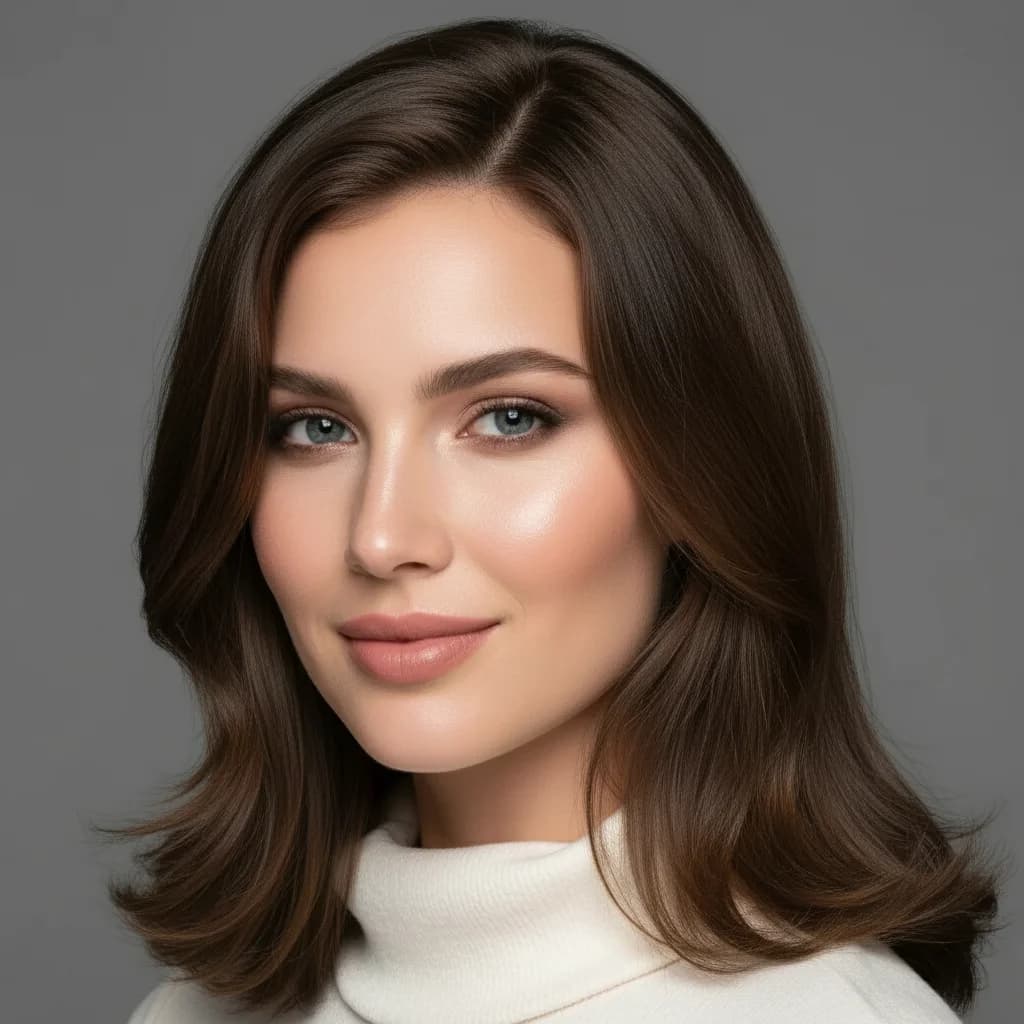
Long layers
Diagonal movement that continues below the jaw.
Lower-face framing guide and photo try-on
Haircuts for a double chin can change the lower frame through length endpoints, diagonal layers, side volume, and movement around the jaw. Use those choices to create a silhouette you enjoy rather than expecting a haircut to change your body.
Keep the source photo unchanged and compare only the haircut. None of these shapes guarantees a slimmer face; they simply create different lines around it.
Diagonal movement that continues below the jaw.
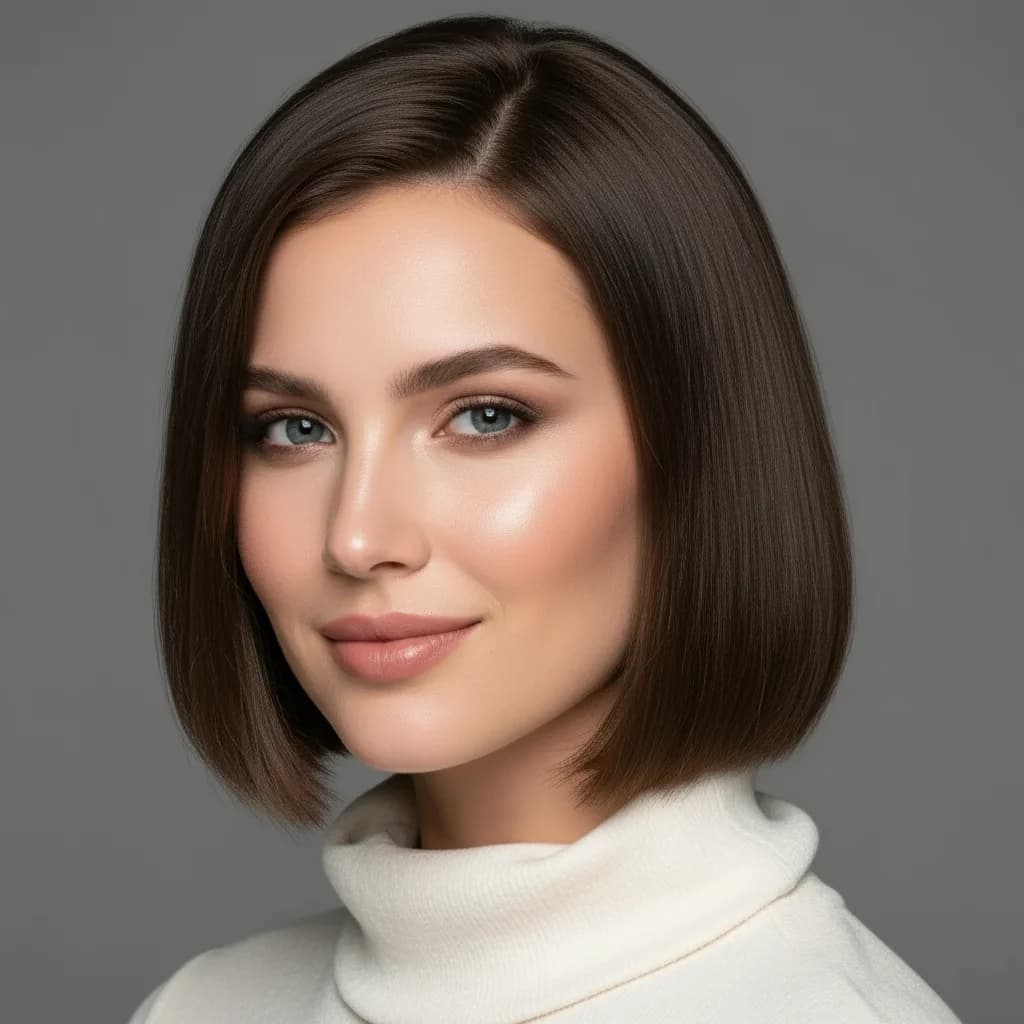
A medium endpoint placed below the lower face.
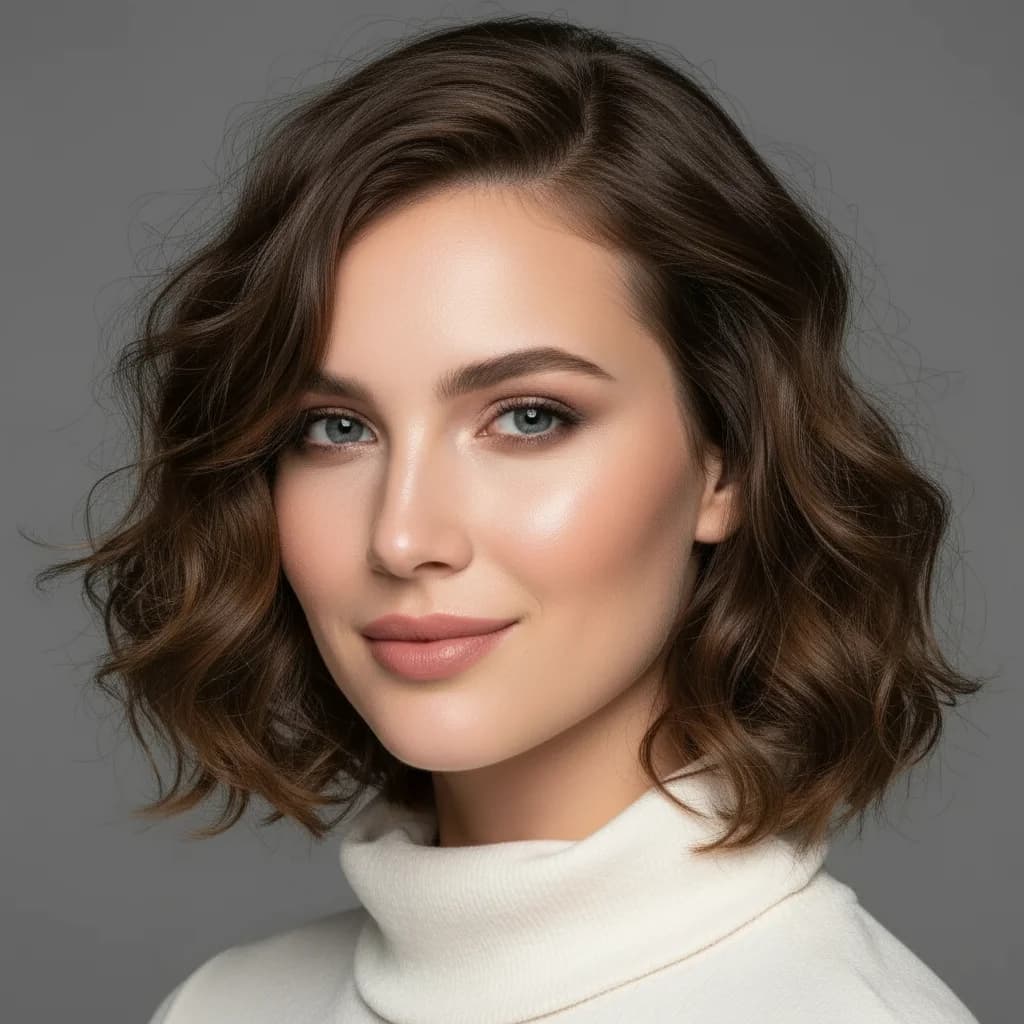
Curved side movement that changes the outer silhouette.
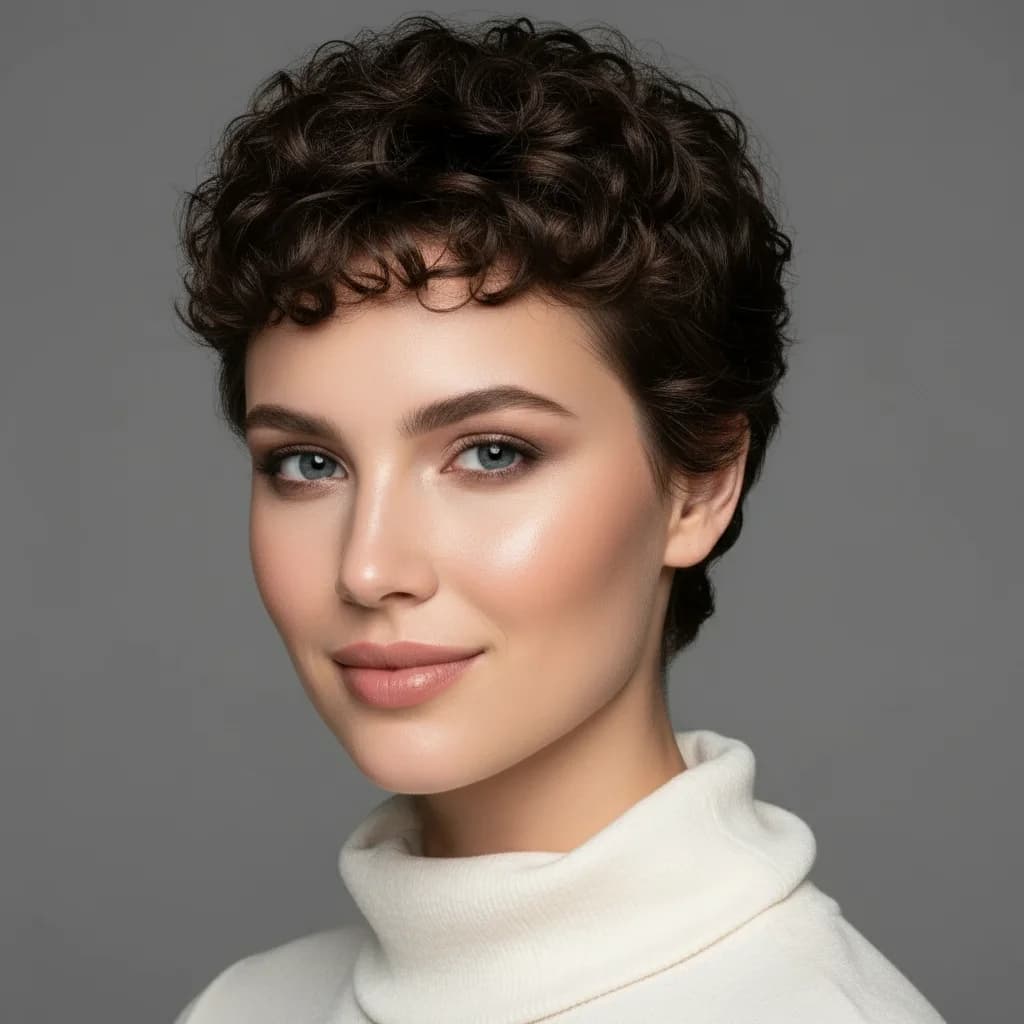
A short, open frame with attention on texture and eyes.
An endpoint directly at the fullest part of the lower face creates a different frame from a cut above or below it. Diagonal pieces and soft movement can guide the eye, while a short clean shape can keep the face fully open.
Upload a neutral front-facing photo that includes the jaw, chin, neck, and shoulders.
Generate a recommendation, then compare one longer framing option with one shorter shape.
Adjust the endpoint, part, volume, or texture and keep the silhouette you prefer.
The useful design question is where the hair creates lines, width, and movement around the lower face. Compare the frame you enjoy without treating a normal facial feature as something that must be hidden.
A lob or longer layer that continues below the jaw avoids ending at the same horizontal point as the fullest part of the lower face.
Angled pieces create movement from the cheek toward the shoulder and can make the frame feel less static.
Moderate movement beside the cheeks and lower face changes the outer silhouette. Avoid concentrating all volume at one narrow horizontal line.
A diagonal part changes the visual path from the forehead through the jaw without requiring full fringe.
A pixie or crop can keep the face open and draw attention to the eyes, texture, and overall haircut rather than using hair as coverage.
Some height can change the overall proportion, but an exaggerated crown is not required. Compare the full silhouette instead of relying on one trick.
Lobs, long layers, diagonal face-framing pieces, soft waves, off-center parts, and textured short cuts create different lower-face frames. Compare endpoints above, at, and below the jaw.
Yes. A pixie, crop, or short bob can create a clean open frame. The endpoint, top texture, side shape, and your personal preference matter more than a rule about hiding the face.
It can, but that endpoint creates a strong horizontal relationship with the lower face. Compare a slightly shorter or longer version if you want a different effect.
No. A haircut changes the lines around the face; it does not change the body. The preview helps compare framing and overall silhouette only.
The intended use is to compare hair around your existing face. Treat any preview as a planning reference and reject results that appear to alter facial features unrealistically.