Curly pixie
Short, textured movement with an easy-to-read outline.
Modern hairstyle guide and photo try-on
Hairstyles for women over 60 can be short, medium, curly, straight, polished, or relaxed. The useful starting point is the shape you enjoy, the texture you have, and the amount of styling and trimming you want to maintain.
Use the same photo to compare silhouette and upkeep. The reference hair may be denser or behave differently from your own, so judge direction rather than exact volume.
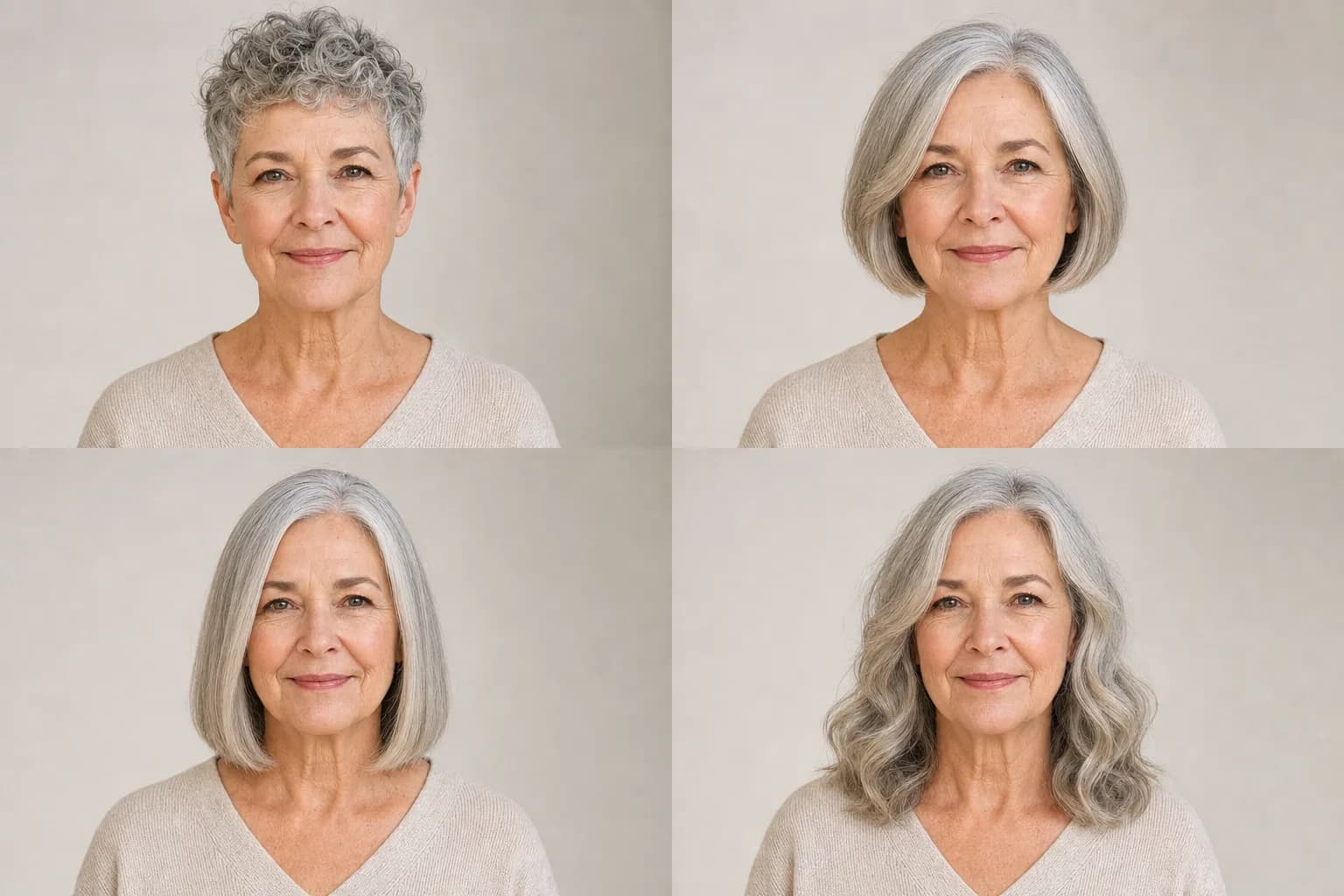
Short, textured movement with an easy-to-read outline.
A polished chin-length shape with a clear perimeter.
Medium length with a stronger edge and flexible styling.
Relaxed movement for a less structured finish.
A flattering result should still work on an ordinary morning. Compare where the cut holds its outline, how it works with gray or colored hair, and whether the volume depends on daily heat styling or frequent salon visits.
Upload a clear photo with your face, hairline, and current texture visible.
Generate a starting recommendation, then compare one shorter and one longer direction.
Refine the bangs, part, texture, or length and keep the version that fits your routine.
Age does not prescribe a haircut. These options help compare maintenance, movement, perimeter, and styling effort without treating one length as automatically more appropriate.
A compact cut can make natural curl or wave easier to shape. Keep enough length where the curl needs room to form instead of cutting every area equally short.
Light layers create movement around the crown and face. A softer edge can feel flexible while still keeping the daily routine short.
A clear bob perimeter can look polished with straight, wavy, gray, or colored hair. Compare chin and jaw placement because a small length change alters the frame.
A lob preserves styling options and can be tied back. A stronger lower edge often needs less daily positioning than many separated layers.
Natural or styled bends add movement without requiring a highly structured cut. Check how much effort the wave pattern needs to remain consistent.
A movable fringe can change the forehead frame without committing to a dense straight bang. Growth pattern and maintenance matter more than age.
Pixies, bobs, lobs, curls, and medium-length layers can all work. The best choice is the one that supports your texture, density, preferred framing, and realistic maintenance routine.
A soft pixie, compact curly cut, classic bob, or blunt lob can reduce daily positioning when it works with your natural texture. Maintenance also includes how often you want trims.
Yes. Hair length is a personal choice. Compare whether the ends keep a clear shape, whether the hair is comfortable to manage, and whether the style works with the density you have.
A soft pixie, bob, or lob with a controlled perimeter can be a useful starting point. Avoid asking the preview to create unrealistic density, and compare the outline instead.
No. Texture, density, growth pattern, gray-hair behavior, styling, and cutting technique affect the real result. Use the preview as a direction to discuss with a stylist.